Finding the right brown weight lifting belt can help protect your lower back during heavy lifts while enhancing core stability. The options below cover multiple leather builds, widths, and adjustability to suit different training styles—from powerlifting to daily conditioning. Each belt is designed to provide firm lumbar support without sacrificing comfort, helping you train longer and safer. Below is a quick overview of five well-rated brown lifting belts and what sets them apart.
| Product | Brand | Width/Thickness | Size Guidance |
|---|---|---|---|
| Genuine Leather Weight Lifting Belt | Jaffick | 6-Inch | True waist size; measure around lower back |
| 5mm Premium Weight Lifting Belt | Tribe Lifting | 10 cm wide, 5 mm thick | 11 sizes; choose by belly measurement |
| DMoose Weightlifting Belt | DMoose Fitness | 4 Inch Wide | Check size chart in images |
| 5mm Premium Weight Lifting Belt (New Size) | Tribe Lifting | 10 cm wide, 5 mm thick | New Medium available; measure abdomen |
| Leather Weight Lifting Belt (4”& 6”) | DEWEAR fitness | 4” & 6” | Sizes M, L, XL; measure at navel |
Genuine Leather Weight Lifting Belt By Jaffick

The Jaffick belt uses double-sided leather with a reinforced structure designed to support heavy lifts while helping prevent back injuries. It emphasizes wide back support and abdomen stabilization, with suede pads to minimize discomfort during daily or intense sessions. Sizes are listed by true waist measurements rather than general pant size, guiding accurate selection for a secure fit. This belt is positioned as durable enough for cross training, powerlifting, and regular gym days, with attention to avoiding overly tight belts that can stress the spine.
5mm Premium Weight Lifting Belt

This belt is built for serious lifters who need strong lumbar support and a sturdy construction. At 10 cm wide and 5 mm thick, it aims to offer an optimal balance of rigidity and comfort for squats, deadlifts, and powerlifting movements. Made from two layers of genuine leather and secured with a robust two-prong buckle, it combines durability with a professional look. The Tribe branding signals a focus on quality in weightlifting accessories, making it a staple option for those who train hard.
DMoose Weightlifting Belt, Genuine Leather

DMoose emphasizes a 5 mm thickness with a 4-inch lumbar pad to deliver reliable lower back support for a wide range of lifters. The belt uses premium sweat-free suede leather for durability and comfort, combined with a secure, adjustable double-pronged buckle to stay in place during intense sets. The size guidance urges customers to verify sizing from the product images to ensure a proper fit that won’t slide or loosen during lifts.
5mm Premium Weight Lifting Belt (New Size)
This belt mirrors Tribe Lifting’s premium build with a 10 cm wide profile and a 5 mm thickness for robust core support. It’s designed to aid in maintaining form during squats and deadlifts while reducing the likelihood of back injuries. The belt is marketed as a durable accessory suitable for serious training routines, and it includes the Tribe debossed logo as a badge of quality. Size recommendations focus on abdominal measurements to ensure a precise, secure fit.
Leather Weight Lifting Belt (4”& 6” Padded) By DEWEAR

DEWEAR’s leather belt offers both 4” and 6” width options with padded lumbar support, designed for deadlifts, squats, and powerlifting. It provides double-stitching and ten adjustable holes, along with an additional leather flap to minimize buckle contact with the torso. The sizing guidance highlights measuring around the navel area rather than relying on generic waist measurements, and larger sizes are recommended if you fall between options.
Leather Weight Lifting Belt (6” Brown, Size M)
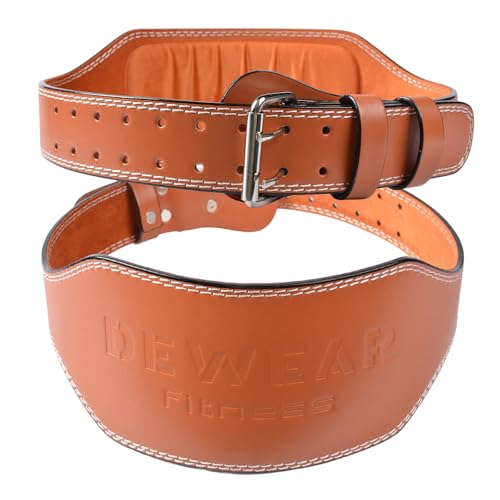
This leather belt features a 6-inch width in a brown finish, designed for lifters seeking maximum core support across compound lifts. It includes dual rows of ten holes for a precise, customizable fit and a sturdy buckle with a leather flap to improve comfort. Size recommendations emphasize measuring at the specific location where the belt will sit to ensure a secure hold during heavy sets.
Buying Guide
Key factors to consider when choosing a brown weight lifting belt include width, thickness, and overall stiffness. Wider belts generally offer greater abdominal support, which can help stabilize the spine during squats and deadlifts, but they may feel bulkier for some lifters. Thicker belts (such as 5 mm) provide firmer support and better load transfer but require a comfortable fit around the midsection. Leather belts tend to be durable and long-lasting, with double-prong or prong-and-slot buckles that hold securely.
Fit is critical: measure the circumference where the belt will sit—usually around the navel or just above it—not the waistline. If you are between sizes, selecting the larger option can reduce pinching and improve comfort during longer workouts. Consider whether you prefer a belt with a leather flap to prevent buckle contact against the torso, which can reduce discomfort during heavy lifts. For cross training, a slightly more flexible belt may offer better mobility, while powerlifters may prioritize a stiffer, more rigid belt to maximize bracing pressure.
Durability and maintenance matter as well. Premium belts use genuine leather with reinforced stitching and robust buckles to withstand repeated loading. Look for belts with clear sizing guidance and reputable brand support. Finally, match the belt to your lifting routine: heavier, competition-style training often benefits from stiffer, 10 cm wide belts, while general conditioning and accessory work can use slightly narrower or more comfortable designs.
Add a Comment