Turning a regular bicycle into a stationary trainer is a practical way to keep riding year-round. This guide highlights devices that fit common wheel sizes, offer adjustable resistance, and simplify mounting and dismounting. Learn how to choose a trainer that matches your bike, noise level, and space, plus tips for safe setup and effective workouts at home.
| Product | Brand | Wheels Fit | Resistance Levels | Notable Feature |
|---|---|---|---|---|
| Sportneer Bike Trainer | Sportneer Store | 26–28″ / 700C | 6 levels | Front wheel riser block included |
| Bike Trainer (CXWXC) | CXWXC Store | 26–29″ / 700C | 6 levels | Quick-release skewer; sturdy pyramid frame |
| VEVOR Bike Trainer | VEVOR Store | 26–29″ / 700C | 6 levels | Foldable, quiet aluminum shaft |
| YOSUDA Exercise Bike | YOSUDA Store | Standard indoor bikes | Not specified (multiple modes | Low noise belt drive; 300 lb capacity |
| CXWXC Bike Trainer (Second Model) | CXWXC Store | 26–29″ / 700C | 6 levels | Front wheel riser block included |
Sportneer Magnetic Bike Trainer
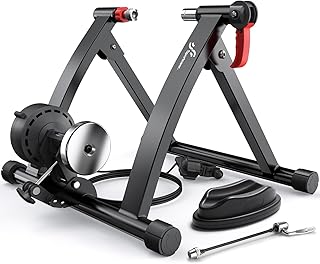
The Sportneer Bike Trainer is designed to fit most road and mountain bikes with 26–28″ or 700C wheels. It includes a quick-release skewer for fast setup and a front wheel riser block to keep the bike stable on the stand. With six resistance levels controlled from the handlebar area, users can simulate various terrains, from flats to climbs. A quick-release lever allows easy mounting and removal, which helps when transitioning between indoor sessions and outdoor riding.
CXWXC Magnetic Bike Trainer Plus

This indoor trainer is built for 26″–29″ wheels, including 700C, and provides six resistance levels via a drive-by-wire device. The pyramid-style stand enhances stability, allowing a weight capacity suitable for most riders. The setup aims for straightforward mounting, with a quick-release skewer included to speed up transitions from outdoor to indoor rides when weather changes or you need a quick workout window.
VEVOR Foldable Bike Trainer

VEVOR’s trainer emphasizes a quiet operation with a heavy-duty aluminum shaft that minimizes noise and vibration. It supports bikes with wheels 26–29 inches or 700C and offers six resistance levels to simulate horizon changes—from warm-ups to uphill climbs. The foldable design helps save space when the trainer is not in use, making it a flexible option for small home setups.
YOSUDA Exercise Bike For Home

YOSUDA’s model pairs a smooth, belt-driven system with a robust frame designed to support up to 300 pounds. While marketed as a traditional exercise bike, its quiet operation and sturdy construction make it a solid base for converting to a stationary setup. It includes a tablet holder and access to compatible fitness programs, which can complement indoor cycling workouts and help with motivation and progress tracking.
CXWXC 2nd Generation Bike Trainer

The second CXWXC trainer maintains the core features of reliability and simplicity: compatibility with 26–29″ wheels, a six-level resistance system, and a quick-release skewer for easier mounting. The included front wheel riser block keeps the bike correctly leveled for stable indoor riding, while the drive components emphasize a balance between realistic resistance and quiet operation necessary for apartment settings.
Buying Guide: Key Purchase Considerations
- Wheel Compatibility: Ensure the trainer supports your bike’s wheel size (commonly 26″–29″ and 700C). Some models include adapters for thru-axle frames—verify compatibility with your bike’s rear axle design.
- Resistance Realism: Look for multiple resistance levels that simulate varied terrain. Six levels are common and adequate for most users, but higher ranges offer more precision for advanced training.
- Mounting and Stability: Quick-release skewers and front wheel riser blocks improve setup speed and stability. A pyramid or reinforced frame design can reduce wobble during intense sessions.
- Noise Level: Belt-driven and well-constructed aluminum components typically produce less noise, which matters in shared living spaces or apartments.
- Ease of Transition: Consider trainers with straightforward mounting/dismounting mechanisms so you can switch between outdoor rides and indoor workouts quickly.
- Space and Storage: Foldable or compact designs help maximize space when the trainer is not in use. Measure your workout area to ensure a comfortable fit.
- App and Training Content: Some models pair with apps or offer compatible training programs. This can aid in motivation, tracking progress, and structured workouts.
- Weight Capacity: Check the maximum rider weight and the weight limit of the stand. A higher limit provides more versatility for different riders or guests.
- Price and Durability: While price varies, prioritize solid construction, load-bearing capacity, and warranty terms to ensure long-term reliability.
When selecting a trainer, match your bike’s specifications with the trainer’s compatibility. Consider your space, how often you plan to train indoors, and whether you want to integrate digital coaching. Proper setup—secure mounting, level positioning, and appropriate tire pressure—will extend the life of both your bike and trainer while enhancing performance and safety during workouts.
Add a Comment