Seeking relief from back strain or a novel way to decompress and build core strength at home? This guide highlights five top inversion and upside-down friendly fitness options, chosen for stability, comfort, and clear instructions. Each item supports safe inversion or decompression routines, including inversion tables, gravity boots, and supportive benches. Explore how these devices can fit into a balanced routine and compare their key features at a glance.
| Product | Brand | Type |
|---|---|---|
| MuChaIOAK Heavy Duty Inversion Table | MuChaIOAK | Inversion Table |
| powerfeng Anti Gravity Inversion Hang Up Boots | powerfeng | Inversion Boots |
| YIPONYT Back Stretch Decompression Bench | YIPONYT | Back Stretch Bench |
| DOBESTS Foldable Power Tower Pull Up Bar | DOBESTS | Power Tower |
| Yes4All Twister Arm Exerciser | Yes4All | Arm & Chest Trainer |
All five products are evaluated for stability, safety features, ease of use, and how well they support decompression or inverted positions. The goal is to provide options across budget ranges and preferences—from full inversion setups to supportive gear that offers safe, partial inversion or hanging options for daily decompression.
MuChaIOAK Heavy Duty Inversion Table

The MuChaIOAK inversion table supports heights from 51.57 to 61 inches via a simple knob mechanism and offers a four-gear limiting bar to set a safe inversion angle. This makes it accessible for beginners who want to ease into inversion sessions and progress gradually. A strong base and widened fixing bars contribute to a sturdy structure capable of handling up to 330.7 pounds, allowing for a broad range of users. Comfort features include a wide back panel, anti-fall shoulder pads, a lumbar cushion, and high-elasticity foam foot pads, all designed to deliver safe, supported decompression. The ergonomic handles and a safe headrest further enhance user stability during workouts.
In practice, this inversion table can be used for back decompressing routines, gentle spinal traction, and core engagement while inverted. The combination of safety rails and a padded support system minimizes risk for users new to inversion. Assembly is straightforward, and routine usage emphasizes controlled movements and gradual angle increases to match personal comfort levels. The device suits users seeking a long-term home invertible option that balances safety with a robust load rating.
powerfeng Anti Gravity Inversion Hang Up Boots

Powerfeng gravity boots are designed to attach to a crossbar or similar sturdy anchor for inverted hang states. The boots feature thick foam padding to enhance comfort during extended wear, with models that accommodate a range of leg sizes by relying on padding and secure closures. A heavy-duty metal hook ensures a strong connection to the crossbar, complemented by a metal safety lock for foot and ankle security. For safety, ensure a suitable crossbar is used and that the hooks are firmly fixed before starting any inversion routine. The boots are marketed for decompression, spinal relief, and back or abdominal training when used with proper support.
While inverted, users can experience gentle traction and spinal alignment benefits, with emphasis on safe entry and exit from the inverted position. The design prioritizes stability under load and a straightforward setup that fits within most home gyms with a pull-up bar. This option is ideal for individuals seeking a compact, focused inversion device that can be added to a broader routine without requiring a full inversion table.
YIPONYT Back Stretch Decompression Bench

The YIPONYT back stretch decompression bench provides a controlled method for spinal relief without fully flipping upside down. It offers a weight capacity of up to 330 pounds and incorporates a traction wheel that allows precise incremental stretching increments, giving users full control over decompression speed and depth. The design focuses on a cushioned bench surface and contoured ankle and arm supports for maximum comfort during traction. An adjustable height and length system makes it adaptable to different body sizes, ensuring stable alignment while performing decompression exercises. The bench is positioned as a practical alternative for users seeking targeted back relief without inversion.
Typical routines emphasize gradual traction, improved spinal alignment, and enhanced blood flow to the spine. The presence of cushioned supports reduces pressure points, while the traction lever simplifies operation. Overall, this bench is suitable for home users who want a low-inversion option with a focus on back health and controlled stretch progression. It can complement a broader fitness plan that includes core work and mobility exercises.
DOBESTS Foldable Power Tower Pull Up Bar
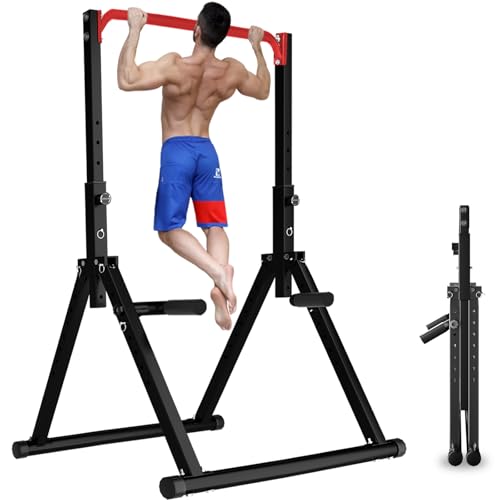
Though not a traditional inversion device, the DOBESTS foldable power tower provides vertical space for a range of inverted or semi-inverted exercises, such as leg raises and reverse push-ups, that can be combined with controlled inversion routines under supervision. The triangular leg design aims to deliver stability, and folding capability enhances space efficiency in smaller living areas. The tower includes eight height adjustments and safety features like anti-slip rubber feet and additional safety pins, contributing to a robust base for various routines. It is positioned as a flexible option for users who want a multi-use piece of equipment that supports upper body strength, core work, and controlled inverted movements when integrated with a safe setup.
In practice, you can anchor a limited inversion style by using the tower alongside a dedicated inversion device or gravity boots, providing a broader range of workouts while maintaining safety guidelines. It’s well-suited for households seeking a versatile piece of gym equipment that doubles as an inversion-supporting framework rather than a sole inversion device.
Yes4All Twister Arm Exerciser

The Yes4All Twister Arm Exerciser offers adjustable resistance for upper body training with a triad of leverage points to improve arm, shoulder, and chest strength. This device supports multiple resistance levels, ranging from 22 to 440 pounds, using a hydraulic adjustment system designed to maintain consistent resistance over time. The triangular frame and reinforced rivets contribute to stability during twisting motions, and the device is positioned as a portable, space-conscious option for home workouts. While not a pure inversion device, it complements inversion-focused routines by building upper body strength and shoulder stability, which can support safer inverted exercises or decompression sessions when combined with other equipment.
For users exploring upside-down workouts, the Twister Arm Exerciser can be a complementary tool that enhances strength in the chest and arms, reducing the risk of strain during inversion. The adjustable resistance provides a scalable challenge as users progress toward more advanced inversion or decompression routines, and its compact design makes it suitable for smaller home gyms or travel use.
Buying Guide
Key considerations when selecting inversion or upside-down equipment include safety, load capacity, and user comfort. Inversion tables like the MuChaIOAK model prioritize full-body support with padded back panels and footrests, and a controlled descent into inversion. For those mainly interested in hanging upside down, gravity boots from powerfeng emphasize secure foot closures, sturdy hooks, and crossbar compatibility but require a solid anchor and careful mounting. If you prefer a non-inversion option with decompression benefits, benches like YIPONYT provide controlled traction with incremental adjustments, while stand-alone towers like the DOBESTS unit offer versatile strength training and space savings. The Yes4All Twister Arm Exerciser adds upper-body resistance for balanced workouts that complement inversion routines.
- Safety first: Look for secure ankle or foot supports, sturdy frames, padded contact surfaces, and locking mechanisms. Ensure your anchor point can bear the expected load.
- Adjustability: Seek devices with height or angle adjustments to match your body size and comfort level. Gradual progression is essential for inversion routines.
- Space and storage: Foldable or compact designs help if you have limited room. Consider whether you prefer a full inversion station or modular pieces you can store.
- Versatility: A multifunction tower or trainer can expand workout options beyond inversion, supporting chest, arms, back, and core training.
- Ease of use: Look for clear assembly instructions, intuitive controls, and straightforward entry/exit from inversion to minimize risk.
Comparative considerations:
- Inversion tables provide full inversion capability with safety padding and a macro adjustment system for depth control, ideal for spinal decompression and flexibility work.
- Gravity boots deliver a pure inversion experience but require a robust anchor and secure mounting, best for users who want intense spinal traction and H-angle variations.
- Back-stretch benches offer non-inversion decompression with controlled traction, which can be easier for beginners or for those with neck or balance concerns.
- Power towers and arm exercisers add complementary strength training that supports inversion routines and improves overall upper body conditioning.
Add a Comment