Discover top weight plate carrier backpacks designed to elevate workouts, build strength, and add resistance to everyday training. This guide highlights five standout options, detailing how each supports secure weight carriage, comfort, and durability for gym and outdoor use.
| Product | Brand | Max Load (approx.) | Key Benefit |
|---|---|---|---|
| Barbell Weighted Backpack | MOST GRIP Store | 45 lbs | Multi-point strap system with secure plate fit |
| GORUCK Ruck Plate Carrier 3.0 | GORUCK Store | Up to 30 lbs (recommended start at 20 lbs) | Elevated pockets and ergonomic back support |
| Weighted Backpack For Gym Weight Plate | THEFITGUY Store | Plate up to 2.5″ thick, 17.5″ diameter | Secure dual-buckle system and padded straps |
| YEEGO DIRECT Weighted Backpack | YEEGO DIRECT Store | Up to 10 lbs | Y-type reinforced structure and inner double strap |
| Polyfit PL8 Backpack | Polyfit Store | Up to 45 lbs | Dual-lock system with zero-bounce carry |
Barbell Weighted Backpack By MOST GRIP Store

The Barbell Weighted Backpack is designed to carry barbell plates with a recommended maximum load of 45 pounds. Its 17.7-inch diameter accommodates standard weights, and when fully expanded, the 3.15-inch thickness supports serious training sessions. The pack emphasizes a secure fit through a multi-point strap system, including adjustable safety buckles and two cross-shaped interior straps to prevent plate shift. Exterior straps on the shoulders, chest, and waist distribute weight evenly for stability during lifts, runs, or endurance drills. Constructed from durable, flexible materials with a breathable back panel, this backpack aims to balance comfort with rugged performance, making it suitable for gym use or at-home workouts.
GORUCK Ruck Plate Carrier 3.0

The Ruck Plate Carrier 3.0 is built for streamlined rucking with an elevated pocket designed for GORUCK Ruck Plates. Its low-profile silhouette minimizes bulk while maintaining comfort for trails or urban settings. Wide, reinforced, and extra-padded straps reduce neck discomfort and offer a smooth carrying experience. The interior foam cushions shoulders, and the exterior foam enhances durability and impact resistance. The design supports high and stable weight distribution by keeping plates high on the back, preventing shifting and bounce for controlled, stable movement. Suitable for users seeking a dedicated platform to grow rucking loads safely.
Weighted Backpack For Gym Weight Plate

This gym-weighted backpack is purpose-built to hold full-size gym plates for push-ups, squats, calisthenics, and more. It specifically accommodates plates up to 17.5 inches in diameter and 2.5 inches thick. Its design centers around a deeper fit to keep weight snug and stable during movements, with reinforced stitching, padded straps, and a dual-buckle system for secure load lock. The adjustable chest and waist straps bring the weight closer to the body, reducing movement and promoting controlled execution of each exercise in both home and gym environments.
YEEGO DIRECT Weighted Backpack
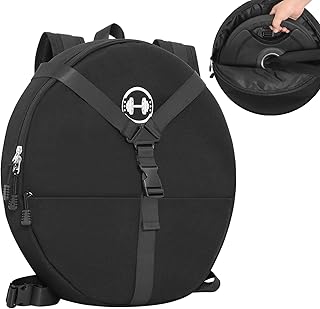
The YEEGO DIRECT Weighted Backpack is designed for bodyweight-focused workouts with a cap of 10 pounds per plate, ensuring safer training for beginners or those focusing on form. Its structure uses a Y-type reinforced framework and an inner double-strap system to lock weights firmly, minimizing shifting during push-ups, squats, or running drills. This setup enhances stability for indoor and outdoor workouts, allowing athletes to gradually increase resistance as strength improves while maintaining a compact, balanced profile on the back.
Polyfit PL8 Backpack For Olympic Weight Plates

The Polyfit PL8 Backpack is built for Olympic-style weight plates, locking weight securely for rucking, pushing, pulling, and general training. It is compatible with most Olympic plates up to 17.5 inches in diameter and 2.5 inches thick, with a recommended maximum load of 45 pounds. The patented dual-lock system uses quick-release steel buckles outside and a compression mechanism inside to eliminate bounce and maintain a stable carry. This design suits serious strength training while preserving mobility for outdoor or gym workouts, making it a versatile option for varied routines and plate configurations.
Buying Guide
- Weight capacity and plate compatibility: Choose a backpack that supports the plate sizes you own (diameter and thickness) and a load that aligns with your training goals. Some models allow up to 45 pounds, while others cap at 10 pounds per plate or 30 pounds total.
- Fit and stability: Look for multi-point straps, padded shoulder/chest/waist supports, and interior cross-straps to minimize plate shifting during dynamic movements like burpees, sprints, or stair climbs.
- Construction and materials: Prioritize durable fabrics, reinforced stitching, and breathable back panels to maximize comfort during long sessions and reduce heat buildup.
- Weight distribution: Designs that place plates high on the back and use external compression systems tend to offer better bounce control and balance during movement.
- Compatibility with different workouts: Ensure the carrier supports a variety of exercises—push-ups, squats, lunges, and calisthenics—without compromising form or safety.
- Portability and setup: Consider ease of adding or removing plates, as well as how the backpack feels when worn for extended periods or while transitioning between exercises.
- Maintenance: Check for easy cleaning and the ability to inspect straps and buckles for wear over time to maintain safe use.
- Use-case considerations: For trail running or rucking, prioritize a low-profile design with secure weight pockets; for gym-based routines, focus on high stability and snug fit.
- Value and warranty: Compare build quality and warranty terms to ensure long-term reliability, especially for heavy-use scenarios.
Add a Comment